
A Beginner’s Guide to Stretching at Home: Simple Steps to Get Started
Stretching is one of the simplest ways to improve your overall health and well-being, yet it is often overlooked in daily routines. Whether you’re new to exercise or just looking to add a few healthy habits to your day, stretching at home is an accessible and beneficial practice. This beginner’s guide will walk you through the basics of stretching, why it matters, and how to get started with easy stretches you can do right in your living room.
Why Stretching Matters
Stretching helps lengthen your muscles and improve your range of motion. It can reduce muscle stiffness, lower the risk of injury, and increase blood flow to your muscles. Doing regular stretches also promotes relaxation and can relieve tension caused by sitting or standing for long periods.
Some of the key benefits of stretching include:
– Improved flexibility: Enhances your ability to move freely and comfortably.
– Better posture: Helps balance the muscles around your joints.
– Pain relief: Reduces muscle tightness and associated discomfort.
– Increased circulation: Promotes nutrient and oxygen delivery to muscles.
– Stress reduction: Encourages relaxation and mindfulness.
Preparing to Stretch at Home
Before you begin, it’s important to create a safe and comfortable environment for your stretching routine.
What You Need
– Comfortable clothing: Wear loose or stretchable clothes that allow movement.
– A quiet space: Find a spot with enough room to stretch without obstacles.
– A yoga mat or soft surface: This will protect your joints, especially if you’re stretching on the floor.
– Water bottle: Staying hydrated supports muscle health.
Warm-Up Is Key
Stretching cold muscles can lead to injury. Spend 3 to 5 minutes warming up your body with light activity such as brisk walking, marching in place, or gentle arm circles before stretching.
Basic Stretching Techniques
There are two common types of stretches to consider:
– Static stretching: Holding a stretch for 15 to 30 seconds without moving. This is ideal after a workout or as a standalone session to improve flexibility and cool down muscles.
– Dynamic stretching: Controlled, slow movements that gently take your muscles through their range of motion, such as leg swings or torso twists. This type is great before exercising to prepare your body.
For beginners, static stretching is an excellent way to start.
Simple Stretches to Try at Home
Here are some beginner-friendly stretches that target major muscle groups:
1. Neck Stretch
– Sit or stand tall.
– Slowly tilt your head to one side, bringing your ear toward your shoulder.
– Hold for 20 seconds, feeling the stretch along the side of your neck.
– Repeat on the other side.
2. Shoulder Stretch
– Extend one arm across your body.
– Use the opposite hand to gently press the extended arm toward your chest.
– Hold for 20-30 seconds and switch arms.
3. Seated Hamstring Stretch
– Sit on the floor with one leg extended straight.
– Bend the other knee, placing the foot against the inner thigh of the straight leg.
– Reach forward gently toward the toes of the extended leg.
– Hold for 30 seconds and switch legs.
4. Cat-Cow Stretch (Spine Mobility)
– Start on your hands and knees in a tabletop position.
– Inhale and arch your back, lifting your head and tailbone toward the ceiling (cow pose).
– Exhale and round your spine, tucking your chin and tailbone (cat pose).
– Repeat this flow 5-8 times.
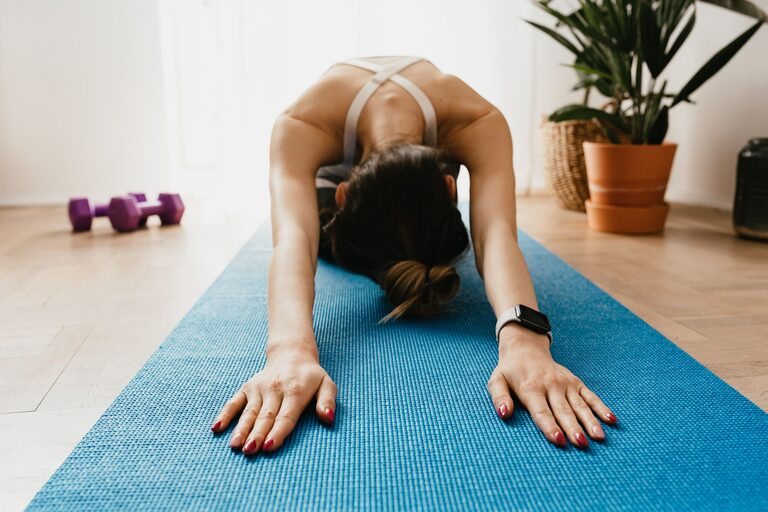
5. Child’s Pose
– Kneel on the floor and sit back on your heels.
– Extend your arms forward and lower your forehead toward the mat.
– Hold this calming stretch for 30 seconds to relax your back and shoulders.
6. Standing Quadriceps Stretch
– Stand with feet hip-width apart.
– Bend one knee and bring your heel toward your buttocks.
– Grab your ankle with the same-side hand to stretch the front thigh.
– Hold for 20-30 seconds, then switch legs.
Tips for Effective Stretching
– Breathe normally: Don’t hold your breath during stretches; steady breathing helps you relax.
– Avoid bouncing: Stretch slowly and hold steady to reduce injury risk.
– Listen to your body: Stretch to a point of gentle tension, never pain.
– Be consistent: Aim to stretch 3-4 times a week to see improvements.
– Combine with other activities: Stretching complements walking, yoga, or strength training.
When to Stretch
Stretching can be done any time of day. Many people find it helpful to stretch in the morning to wake up their bodies or in the evening to unwind before bed. After exercise is also a great time to stretch, as your muscles are warm.
Tracking Your Progress
Keep a simple journal or use a mobile app to track your stretching routine. Note how long you stretch, which muscles you worked, and how you feel afterward. This helps keep you motivated and allows you to notice improvements in your flexibility over time.
Final Thoughts
Starting a stretching routine at home requires no special equipment and just a few minutes a day. By incorporating these basic stretches into your lifestyle, you’ll enjoy better movement, less tension, and a greater sense of well-being. Remember to be patient and kind to yourself as your body adjusts and grows stronger.
Try to make stretching a regular part of your day, and soon it will become a healthy, enjoyable habit that supports your overall fitness and happiness. Happy stretching!
